
This article's table of contents introduction:
- Table of Contents
- Introduction: The Core of Modern Industrial Ventilation
- Understanding the Specifications: 380V / 50Hz Power Supply
- What Does “Medium Pressure, High Volume” Mean?
- Why Customization Matters in ID Fan Design
- Key Technical Parameters and Performance Characteristics
- Common Applications and Industry Use Cases
- Frequently Asked Questions (FAQ)
- How to Select the Right Custom ID Fan Supplier
- Conclusion: Investing in Performance and Reliability
Optimizing Industrial Ventilation: The Complete Guide to 380V / 50Hz Customized Medium Pressure High Volume ID Fan Systems**
Table of Contents
- Introduction: The Core of Modern Industrial Ventilation
- Understanding the Specifications: 380V / 50Hz Power Supply
- What Does “Medium Pressure, High Volume” Mean?
- Why Customization Matters in ID Fan Design
- Key Technical Parameters and Performance Characteristics
- Common Applications and Industry Use Cases
- Frequently Asked Questions (FAQ)
- How to Select the Right Custom ID Fan Supplier
- Conclusion: Investing in Performance and Reliability
Introduction: The Core of Modern Industrial Ventilation
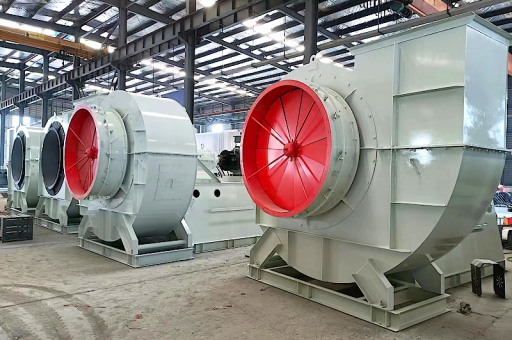
In any heavy industrial operation—whether in cement plants, steel mills, chemical processing facilities, or power generation units—the efficiency of the ventilation system directly impacts production quality, worker safety, and energy consumption. Among the most critical components is the Induced Draft (ID) fan, specifically a 380V / 50Hz Customized Medium Pressure High Volume ID Fan. This equipment is engineered to handle large volumes of air or gas at moderate static pressures, often in harsh environments containing dust, heat, or corrosive elements.
Unlike standard off-the-shelf fans, a customized medium pressure high volume ID fan is developed to match specific system resistance, temperature conditions, and space constraints. This article provides a comprehensive, search-engine-optimized overview of its design, benefits, selection criteria, and maintenance considerations.
Understanding the Specifications: 380V / 50Hz Power Supply
The specification 380V / 50Hz is the most common three-phase industrial power standard in regions such as Europe, Asia, the Middle East, and parts of Africa. This voltage-frequency combination ensures stable motor operation and allows for high torque at startup—critical for large impeller fans.
- Voltage (380V): Provides sufficient electrical potential to drive motors ranging from a few kilowatts to several hundred kilowatts without excessive current draw.
- Frequency (50Hz): Determines the synchronous speed of the motor. For a 4-pole motor, the shaft rotates at approximately 1,450 RPM under load. This speed range is ideal for medium pressure applications where high airflow is needed without excessive noise or vibration.
- Why Not 60Hz? In 50Hz systems, fans typically operate at lower speeds than their 60Hz counterparts, which can reduce wear but may require larger impellers or higher blade angles to maintain the same airflow volume.
When selecting a motor for your ID fan, ensure it is rated for continuous duty (S1) and has an IP55 or higher enclosure for dust and moisture resistance.
What Does “Medium Pressure, High Volume” Mean?
In industrial fan terminology, “pressure” and “volume” are inversely related by the fan’s performance curve.
- Medium Pressure: Typically ranges from 2,000 Pa to 5,000 Pa (approximately 8 to 20 inches w.g.). This is higher than low-pressure axial fans but lower than high-pressure centrifugal blowers. It is ideal for overcoming duct friction, filter resistance, and minor system losses in large-scale ventilation.
- High Volume: Refers to airflow rates often exceeding 50,000 m³/h, and sometimes reaching up to 500,000 m³/h or more. This is essential for maintaining negative pressure in large spaces, exhausting hot gases from boilers, or removing dust-laden air in material handling systems.
A customized medium pressure high volume ID fan combines these two parameters efficiently. For example, a cement kiln ID fan must pull combustion gases through a baghouse or electrostatic precipitator while handling temperatures up to 250°C and particulate loads. Standard fans cannot meet such demanding conditions.
Why Customization Matters in ID Fan Design
Customization is not a luxury—it is a necessity in complex industrial environments. Here are the key areas typically customized:
- Impeller Design: Backward-curved, forward-curved, or radial blades are selected based on the gas composition, temperature, and required efficiency. For abrasive dust, wear-resistant coatings or hardened steel impellers are recommended.
- Housing Material: Carbon steel is typical, but stainless steel (SS304/SS316) or specialized alloys are used for corrosive or high-temperature gases.
- Inlet and Outlet Configurations: Custom flanges, orientation (top, side, or bottom), and transition pieces ensure seamless integration with existing ductwork.
- Motor Mounting: Direct drive (for higher efficiency, lower maintenance) or belt drive (for adjustable speed and torque) options are chosen based on operational requirements.
- Variable Frequency Drive (VFD) Compatibility: Many modern custom ID fans are designed to work with VFDs, allowing precise airflow control and significant energy savings. For a 380V/50Hz system, a VFD can adjust motor speed from 10% to 100%.
Key Technical Parameters and Performance Characteristics
When evaluating a 380V / 50Hz Customized Medium Pressure High Volume ID Fan, review the following specifications:
| Parameter | Typical Value | Notes |
|---|---|---|
| Airflow (Volume) | 50,000 – 500,000 m³/h | Dependent on duct size and system resistance |
| Static Pressure | 2,000 – 5,000 Pa | Medium pressure classification |
| Motor Power | 30 kW – 500 kW | Based on fan curve and efficiency |
| Impeller Diameter | 1,200 mm – 3,200 mm | Larger diameters for lower RPM operation |
| Operating Temperature | Up to 400°C | With appropriate cooling and materials |
| Efficiency (Fan Only) | 75% – 85% | Higher for backward-curved designs |
| Noise Level | 80 – 95 dB(A) | Silencers can be integrated |
Question: What is the difference between a forced draft (FD) fan and an induced draft (ID) fan?
Answer: An FD fan is located at the inlet of a system, pushing clean air into the process (e.g., a boiler). An ID fan is located at the outlet, pulling exhaust gases out and creating negative pressure. ID fans often handle hotter, dirtier air and require more robust construction.
Common Applications and Industry Use Cases
Custom medium pressure high volume ID fans are deployed across diverse sectors:
- Power Plants: Exhausting flue gas from coal-fired or biomass boilers, often after scrubbers and precipitators.
- Cement Industry: Kiln and cooler exhaust, raw mill ventilation, and clinker cooling. These fans must handle high temperatures (up to 350°C) and abrasive dust.
- Steel Manufacturing: Furnace ventilation, exhaust from sintering plants, and coke oven gas extraction.
- Chemical & Petrochemical: Gas evacuation from reactors, distillation columns, and storage tank venting. Materials must resist corrosion from acids or chlorides.
- Waste-to-Energy: Pulling combustion gases through filtration systems. High reliability is critical to prevent plant shutdowns.
Question: Can a standard 380V/50Hz fan be used in a 60Hz system?
Answer: No. Using a 50Hz fan on a 60Hz supply will increase rotational speed by 20%, raising airflow and pressure beyond design limits, potentially causing motor overload, impeller failure, or excessive noise. Always match voltage and frequency to the fan’s nameplate rating.
Frequently Asked Questions (FAQ)
Q1: How do I calculate the required static pressure for my ventilation system?
A: Sum all system resistances: duct friction (calculated using Darcy-Weisbach or simplified charts), filter pressure drop, damper losses, and stack effect. Add a 10-15% safety margin. Your fan supplier can use this data to match a custom fan curve.
Q2: What is the expected lifespan of a custom ID fan?
A: With proper maintenance (balancing, bearing lubrication, impeller inspection), a heavy-duty ID fan lasts 15–25 years. Blade erosion or corrosion can shorten life significantly in harsh environments.
Q3: How does a VFD improve energy efficiency for a 380V/50Hz fan?
A: Fan power consumption is proportional to the cube of speed. Reducing speed by 20% can cut power by nearly 50%. A VFD allows precise speed control based on real-time demand, rather than using throttling dampers which waste energy.
Q4: What are the noise reduction options for high volume ID fans?
A: Options include acoustic enclosures, inlet/outlet silencers, vibration isolators, and choosing backward-curved blade designs which operate quieter than forward-curved blades.
Q5: Should I choose a direct drive or belt drive?
A: Direct drive offers higher efficiency, lower maintenance, and no belt slippage. Belt drive allows for speed adjustments by changing pulleys and can protect the motor from shock loads. For high reliability applications, direct drive with a VFD is often preferred.
How to Select the Right Custom ID Fan Supplier
Choosing a reliable manufacturer for your 380V / 50Hz Customized Medium Pressure High Volume ID Fan is the most critical step. Consider these criteria:
- Engineering Capability: Does the supplier offer computational fluid dynamics (CFD) analysis and finite element analysis (FEA) for structural integrity? These tools optimize impeller geometry and predict performance.
- Material Traceability: Ensure the supplier provides certifications for steel, welding, and coatings. For high-temperature applications, request heat treatment records.
- Testing Facilities: A reputable manufacturer will test each fan in a performance test rig to verify airflow, pressure, and vibration levels. Request a stamped test curve per ISO 5801 or AMCA 210.
- After-Sales Support: Spare parts availability (bearings, impellers, shafts) and local service technicians are vital for minimizing downtime.
- Reference Projects: Ask for case studies or customer references in your specific industry. A cement plant ID fan is very different from a power plant ID fan.
Question: Can I retrofit an existing ID fan with a custom impeller?
Answer: Yes, many suppliers offer impeller-only retrofits. This is cost-effective if the housing and motor are in good condition. However, ensure the housing matches the new impeller’s width and inlet cone geometry.
Conclusion: Investing in Performance and Reliability
A 380V / 50Hz Customized Medium Pressure High Volume ID Fan for Industrial Ventilation is not merely a component—it is a strategic investment in your facility’s productivity, safety, and environmental compliance. By choosing a solution that is precisely engineered for your system’s unique thermal, particulate, and pressure parameters, you reduce energy consumption, extend equipment life, and avoid costly unplanned shutdowns.
Whether you operate a large cement kiln, a chemical plant, or a waste-to-energy facility, partnering with an experienced fan manufacturer who offers full customization for the 380V/50Hz electrical standard will ensure optimal performance for decades.
For further information on custom ID fan design, performance curves, or to request a quotation, please contact a trusted industrial fan supplier. Always provide your complete system data (airflow, pressure, temperature, altitude, gas composition) for the most accurate fan selection.





