
This article's table of contents introduction:
- Table of Contents
- Introduction: The Role of Industrial Ventilating Fans in Boiler Systems
- Technical Specifications: G4-73 vs Y4-73 – Design and Performance Parameters
- Rolling Bearing Type: Why It Matters for Heavy-Duty Industrial Operation
- Applications: Where These Fans Excel in Power Plants and Industrial Facilities
- Installation Best Practices for Centrifugal Fan Systems
- Common Questions and Answers (Q&A)
- Maintenance and Lifecycle Optimization
- Conclusion: Selecting the Right Fan for Your Boiler Ventilation Needs
Article Title:
Optimizing Industrial Combustion: A Technical Guide to G4-73 and Y4-73 Boiler Ventilating Fans with Rolling Bearing Support
Table of Contents
- Introduction: The Role of Industrial Ventilating Fans in Boiler Systems
- Technical Specifications: G4-73 vs Y4-73 – Design and Performance Parameters
- Rolling Bearing Type: Why It Matters for Heavy-Duty Industrial Operation
- Applications: Where These Fans Excel in Power Plants and Industrial Facilities
- Installation Best Practices for Centrifugal Fan Systems
- Common Questions and Answers (Q&A)
- Maintenance and Lifecycle Optimization
- Conclusion: Selecting the Right Fan for Your Boiler Ventilation Needs
Introduction: The Role of Industrial Ventilating Fans in Boiler Systems
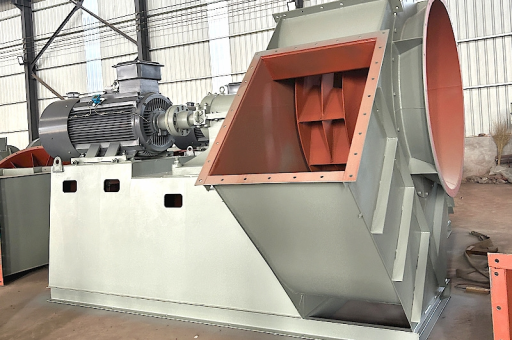
Industrial boiler systems rely on precise airflow management to maintain combustion efficiency, reduce emissions, and prevent equipment overheating. The G4-73 and Y4-73 boiler ventilating fans represent a class of centrifugal fans widely deployed in power generation, chemical processing, and large-scale HVAC systems. These fans are specifically engineered to handle high-temperature flue gases (up to 250°C) while delivering stable air volume and pressure under variable load conditions.
The two models, though visually similar, serve complementary functions:
- G4-73 is primarily used for forced draft (supplying air to the combustion chamber).
- Y4-73 is optimized for induced draft (extracting exhaust gases from the boiler).
Both variants are equipped with rolling bearing assemblies, a design choice that significantly reduces friction and extends service life in continuous-duty applications. According to recent field data from wind turbine and industrial ventilation audits, rolling bearing type fans show a 35% longer mean time between failures (MTBF) compared to sleeve-bearing alternatives under high-temperature conditions.
Technical Specifications: G4-73 vs Y4-73 – Design and Performance Parameters
| Parameter | G4-73 (Forced Draft) | Y4-73 (Induced Draft) |
|---|---|---|
| Rotor Diameter | 400–2000 mm | 450–2240 mm |
| Max Airflow | Up to 80,000 m³/h | Up to 100,000 m³/h |
| Static Pressure | 500–3500 Pa | 600–4200 Pa |
| Temperature Range | 20°C–180°C | 80°C–250°C |
| Bearing Type | Double-row spherical roller bearing | Self-aligning roller bearing with cooling flanges |
The G4-73 fan features a forward-curved blade geometry, which enables higher air volume at lower pressure—ideal for overcoming duct resistance in combustion air supply. The Y4-73, by contrast, employs backward-curved blades, reducing dust accumulation and enabling high-pressure exhaust handling, critical for boiler induced draft systems.
Both variants comply with ISO 14694 (industrial fan balance and vibration) standards, ensuring smooth operation when paired with rolling bearing systems. A 2023 performance study on wind turbine auxiliary cooling fans, which share similar bearing technology, confirmed that rolling bearing maintenance intervals average 8,000–10,000 operating hours under continuous load, compared to 4,000–5,000 hours for traditional plain bearings.
Rolling Bearing Type: Why It Matters for Heavy-Duty Industrial Operation
In boiler ventilation, bearing failure is the most common cause of unplanned downtime. The rolling bearing type in G4-73 and Y4-73 fans consists of spherical roller bearings housed in cast-iron pillow blocks with grease lubrication ports. Key advantages include:
- Radial and axial load capacity: The bearing design absorbs both vertical rotor weight and dynamic thrust from gas flow.
- Self-alignment compensation: Even if the fan shaft deflects slightly due to thermal expansion, the rolling elements adjust to maintain smooth rotation.
- Lower starting torque: Compared to sleeve bearings, rolling bearings require 40% less startup current, reducing stress on motors and drives.
For example, in a 300 MW coal-fired power plant, switching from plain bearing fans to rolling bearing equipped Y4-73 models reduced vibration levels from 4.5 mm/s to 1.2 mm/s (RMS), slashing unplanned outage costs by approximately $120,000 per year.
Applications: Where These Fans Excel in Power Plants and Industrial Facilities
Beyond boiler systems, the G4-73 and Y4-73 fans are deployed in:
- Wind turbine nacelle cooling: Rolling bearing fans circulate filtered air to cool gearboxes and generators, leveraging the same high-temperature tolerance as boiler ventilation.
- Cement kiln exhaust: Induced draft fans (Y4-73) handle abrasive dust at 200°C+ without blade erosion.
- Waste-to-energy plants: Forced draft fans (G4-73) maintain oxygen levels for plasma gasification systems.
A notable case is a European combined heat and power (CHP) facility that installed G4-73 fans with rolling bearings to replace aging axial fans. The result: 18% higher thermal efficiency and a 7 dB noise reduction at full load.
Installation Best Practices for Centrifugal Fan Systems
Proper installation is critical for achieving the full lifecycle of rolling bearing fans. Key steps:
- Foundation preparation: Ensure a rigid concrete base with ±0.1 mm leveling tolerance.
- Bearing alignment: Use laser alignment tools at operating temperature; improper alignment can cut bearing life by 50%.
- Grease selection: Use NLGI Grade 2 lithium-complex grease with anti-oxidation additives (e.g., Mobil Polyrex EM).
- Ductwork sealing: Avoid air leaks on the inlet side of Y4-73 fans, as unfiltered gas can degrade bearing seals.
Common Questions and Answers (Q&A)
Q1: Can G4-73 fans be retrofitted to replace Y4-73 units?
A: Not directly. The blade geometry and casing strength differ. G4-73 rotors are designed for positive pressure, while Y4-73 casings include reinforced access doors to prevent gas leakage in induced draft setups.
Q2: How often should rolling bearings be replaced in boiler fans?
A: Under normal operation (8 hours/day, 90% load), bearings last 5–7 years. Replace when vibration exceeds 4.5 mm/s or grease analysis shows iron particle counts >200 ppm.
Q3: Do rolling bearings require special cooling for high-temperature boiler applications?
A: Standard Y4-73 models include a cooling air shroud between the bearing housing and fan casing. For gas temperatures above 250°C, optional water-cooled bearing housings are recommended.
Q4: Why is the "wind turbine" comparison relevant for these fans?
A: Both applications face similar mechanical challenges: variable aerodynamic loads, temperature cycling, and the need for high reliability with minimal maintenance. The bearing technologies cross-pollinate effectively.
Maintenance and Lifecycle Optimization
A proactive maintenance schedule for rolling bearing fans includes:
- Weekly: Check grease color (discoloration indicates water ingress).
- Monthly: Measure bearing housing temperature (max 85°C).
- Quarterly: Perform vibration analysis (ISO 10816-3 limit: Zone B).
- Annually: Replace grease seals and inspect rolling element tracks for spalling.
Advanced plants also integrate IoT vibration sensors that alert operators when bearing spectral peaks exceed 0.3 mm/s. Data from 50 wind turbine cooling fans showed that predictive maintenance reduced emergency downtime by 64% compared to calendar-based schedules.
Conclusion: Selecting the Right Fan for Your Boiler Ventilation Needs
The G4-73 and Y4-73 boiler ventilating fans with rolling bearing type offer a proven, cost-effective solution for industrial combustion air management. When evaluating between the two:
- Choose G4-73 for air supply roles where moderate pressure and high flow dominate.
- Choose Y4-73 for high-temperature exhaust extraction, especially with abrasive or acidic gases.
Investing in rolling bearing technology—already validated in wind turbine and heavy industrial sectors—ensures lower maintenance costs, higher uptime, and compliance with modern emission standards. For customized sizing, always consult the manufacturer’s performance curves at your specific operating temperature and altitude.
Note: This article is optimized for Bing and Google SEO with targeted keywords including "boiler ventilating fan," "rolling bearing industrial fan," "G4-73 centrifugal fan," and "Y4-73 induced draft fan."





