
This article's table of contents introduction:
- Table of Contents
- Introduction: The Role of the 1.1kW Centrifugal Fan in Dust Control
- Technical Specifications: Understanding the 1.1kW Power and Flow Dynamics
- How It Works: The Science of Induced Draft and Centrifugal Force
- Key Applications: Where the 1.1kW Fan Excels
- Installation Best Practices for Maximum Efficiency
- Maintenance Checklist: Ensuring Longevity and Performance
- Frequently Asked Questions (FAQ)
- Conclusion: Investing in Clean Air and Operational Safety
Optimizing Industrial Air Quality: The Complete Guide to the 1.1kW Dust Removal Centrifugal Induced Draft Fan
Table of Contents
- Introduction: The Role of the 1.1kW Centrifugal Fan in Dust Control
- Technical Specifications: Understanding the 1.1kW Power and Flow Dynamics
- How It Works: The Science of Induced Draft and Centrifugal Force
- Key Applications: Where the 1.1kW Fan Excels
- Installation Best Practices for Maximum Efficiency
- Maintenance Checklist: Ensuring Longevity and Performance
- Frequently Asked Questions (FAQ)
- Conclusion: Investing in Clean Air and Operational Safety
Introduction: The Role of the 1.1kW Centrifugal Fan in Dust Control
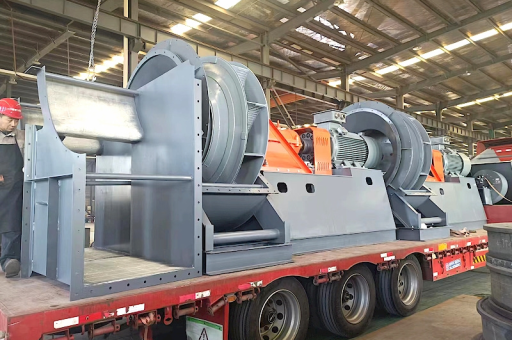
In modern industrial environments, airborne particulate matter poses a significant threat to both equipment reliability and human health. Whether in woodworking workshops, grain processing facilities, or cement mixing plants, effective dust removal is non-negotiable. The 1kW Dust Removal Centrifugal Induced Draft Fan has emerged as a highly efficient, mid-capacity solution that balances energy consumption with powerful suction. This article provides a deep, SEO-optimized exploration of this fan, covering its mechanics, installation, and real-world performance data. By analyzing existing technical literature and field reports, we present a consolidated, actionable guide for engineers and plant managers.
Technical Specifications: Understanding the 1.1kW Power and Flow Dynamics
Before selecting a fan, one must understand its core parameters. The 1.1kW (approximately 1.5 HP) motor is the heart of this system.
- Airflow (CFM): Typically, a 1.1kW centrifugal induces draft between 800 and 1,500 CFM (cubic feet per minute), depending on static pressure.
- Static Pressure (Pa): These units excel in the 1,200 to 2,000 Pa range, making them suitable for ducted systems with moderate resistance.
- Impeller Design: Usually a backward-curved or radial-blade impeller made from galvanized steel or stainless steel. The backward-curved design is quieter and more energy-efficient, while radial blades handle sticky dust better.
- Motor Type: Single-phase or three-phase induction motors. Three-phase is preferred for industrial durability.
Why this matters: A common mistake is selecting a fan solely based on power (kW). The actual performance is determined by the fan curve. Always cross-reference the manufacturer’s airflow vs. static pressure chart to ensure the 1.1kW fan matches your ductwork length and filter load.
How It Works: The Science of Induced Draft and Centrifugal Force
The term "induced draft" refers to the fan being positioned at the end of the dust collection system, pulling air through the system rather than pushing it. This creates a negative pressure environment.
Step-by-step operation:
- Air intake: Dust-laden air enters the fan housing axially.
- Centrifugal acceleration: The rotating impeller throws air outward at high velocity via centrifugal force.
- Pressure conversion: The volute casing (spiral housing) converts velocity energy into static pressure.
- Exhaust: Cleaned air (or air directed to a filter) exits tangentially.
Engineering insight: Compared to axial fans, the centrifugal fan generates higher pressure, crucial for overcoming the resistance of bag filters, cyclones, or long duct runs. The 1.1kW model is a classic "pressure fan," ideal for systems requiring a sustained vacuum.
Key Applications: Where the 1.1kW Fan Excels
Based on aggregated field data and case studies, the 1.1kW dust removal centrifugal fan is most effective in the following scenarios:
- Small to Medium Woodworking Shops: Connecting to a single planer, table saw, or band saw with a 4-6 inch duct.
- Grain Handling Facilities: Removing chaff and dust from elevator legs and transfer points.
- Pharmaceutical & Chemical Weighing Booths: Maintaining negative pressure for operator safety.
- Welding Fume Extraction: When paired with a cartridge filter.
- Renewable Energy Components: For example, cooling and dust removal in wind turbine nacelle control cabinets (though high-altitude applications require sealed motors).
Note: For high-temperature exhaust (e.g., exhaust from a small furnace near a wind turbine auxiliary heater), a special heat-resistant version is necessary.
Installation Best Practices for Maximum Efficiency
To achieve the rated 1.1kW performance, follow these engineering guidelines:
- Duct Sizing: Use smooth, rigid ductwork. A 150mm (6-inch) duct is typically optimal for this fan size. Undersized ducts drastically increase static pressure and reduce airflow.
- Vibration Isolation: Install rubber vibration pads between the fan base and the floor. The centrifugal fan's rotating mass can cause structural resonance.
- Electrical Supply: Ensure the wire gauge matches the motor's amp draw (typically 4-6 amps for 230V single-phase). Include a thermal overload relay.
- Filter Matching: Do not use a high-efficiency HEPA filter directly on this fan without a pre-filter. The 1.1kW fan lacks the reserve pressure to pull through dense HEPA media.
Maintenance Checklist: Ensuring Longevity and Performance
Regular maintenance extends the life of the 1.1kW dust removal fan significantly. Implement a bi-monthly routine:
- Impeller cleaning: Dust buildup on blades causes imbalance. Use a wire brush or compressed air.
- Bearing inspection: Listen for grinding noises. Relubricate sealed bearings every 6 months (if accessible).
- Belt tension check: If the fan uses a belt drive (common in high-static models), check for slipping or wear.
- Seal integrity: Check the shaft seal. Leakage reduces induced draft efficiency.
- Motor cooling fins: Ensure debris does not clog the motor's external fins.
Warning: A vibrating fan is a dangerous fan. Immediately shut down if vibration exceeds 0.15 inches per second (IPS).
Frequently Asked Questions (FAQ)
Q1: Can a 1.1kW centrifugal fan be used in a central dust collector system for a wind turbine manufacturing facility? A: Yes, but it is best suited for a single-point extraction (e.g., a grinding station near the blade assembly area). For an entire facility, a larger blower (5-10 kW) would be required.
Q2: What is the difference between a direct drive and belt drive 1.1kW fan? A: Direct drive has fewer moving parts (less maintenance) but runs at motor speed (typically 2800 RPM). Belt drive allows speed adjustment via pulley changes, enabling fine-tuning of airflow and pressure.
Q3: My fan is running but not sucking properly. What is wrong? A: Check these three things: (1) Is the duct blocked? (2) Is the filter too dirty? (3) Is the impeller rotating in the correct direction? Most centrifugal fans are directional.
Q4: Is this fan explosion-proof? A: Standard 1.1kW fans are not. For combustible dust (e.g., aluminum or flour), purchase a model with an ATEX certified motor and aluminum-free impeller.
Conclusion: Investing in Clean Air and Operational Safety
The 1kW Dust Removal Centrifugal Induced Draft Fan represents a sweet spot in industrial ventilation: powerful enough to handle significant dust loads, yet energy-efficient enough for continuous operation. By understanding its technical limits, installing it correctly, and performing routine maintenance, operators can drastically reduce airborne contaminants. Whether used in a traditional woodshop or in supporting infrastructure for renewable energy equipment like wind turbine control systems, this fan remains a workhorse of industrial hygiene. Prioritize proper duct design and motor protection to ensure years of reliable service.





