
This article's table of contents introduction:
- Table of Contents / 目录导读
- Introduction: Why Induced Draft Fans Matter in Power Plants
- Understanding the Mechanism: How Induced Draft Fans Work
- The Shift Toward High-Efficiency and Energy-Saving Designs
- Key Technologies Behind Modern Energy-Saving Induced Draft Fans
- Case Study: Real-World Performance Gains in Coal and Gas Plants
- Common Questions & Answers (Q&A)
- Conclusion: The Future of Power Generation with Smart Fan Systems
*Maximizing Industrial Efficiency: The Role of High-Efficiency Energy-Saving Induced Draft Fans in the Power Generation Industry*
Table of Contents / 目录导读
- Introduction: Why Induced Draft Fans Matter in Power Plants
- Understanding the Mechanism: How Induced Draft Fans Work
- The Shift Toward High-Efficiency and Energy-Saving Designs
- Key Technologies Behind Modern Energy-Saving Induced Draft Fans
- Case Study: Real-World Performance Gains in Coal and Gas Plants
- Common Questions & Answers (Q&A)
- Conclusion: The Future of Power Generation with Smart Fan Systems
Introduction: Why Induced Draft Fans Matter in Power Plants
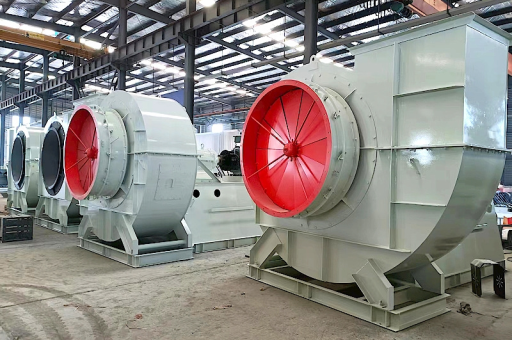
In the power generation industry, induced draft fans (ID fans) are critical components of the boiler system. Their primary function is to pull flue gas out of the combustion chamber, maintain negative pressure, and ensure safe, efficient combustion. Without a properly functioning ID fan, a plant risks reduced thermal efficiency, increased emissions, and even equipment damage.
However, traditional ID fans are notorious for high energy consumption—often accounting for 2% to 5% of a plant's total electricity output. As global energy prices rise and environmental regulations tighten, the demand for high-efficiency energy-saving induced draft fans has surged. These advanced fans not only reduce electrical load but also improve overall plant reliability and lower carbon footprints.
Understanding the Mechanism: How Induced Draft Fans Work
An induced draft fan is typically installed downstream of the boiler, between the air preheater and the stack. It creates a slight vacuum (negative pressure) inside the furnace, which draws in fresh combustion air while expelling hot gases.
Key parameters that affect fan performance include:
- Flow rate (CFM or m³/s)
- Static pressure
- Fan speed and blade geometry
- System resistance
Traditional fans often use fixed-speed motors and throttling dampers to control flow, resulting in significant energy losses due to partial load inefficiencies.
The Shift Toward High-Efficiency and Energy-Saving Designs
The power generation sector is undergoing a major transition—away from outdated, energy-intensive equipment toward smarter, more sustainable solutions. High-efficiency energy-saving induced draft fans represent a paradigm shift.
These fans are designed to:
- Reduce electricity consumption by 15% to 35% compared to standard models
- Lower maintenance costs through advanced bearing and sealing systems
- Minimize noise and vibration levels
- Adapt to variable load conditions without sacrificing performance
A key enabler is the integration of variable frequency drives (VFDs), which allow fan speed to match real-time demand rather than running at full speed all the time. This alone can cut fan energy use by up to 50% during low-load periods.
Key Technologies Behind Modern Energy-Saving Induced Draft Fans
To achieve true high efficiency, manufacturers have incorporated the following innovations:
a. Aerodynamically Optimized Blade Profiles
Modern blades use computational fluid dynamics (CFD) modeling to reduce drag and turbulence. This results in smoother airflow and lower power draw.
b. Variable Frequency Drives (VFDs)
As mentioned, VFDs allow precise speed control. Instead of using wasteful dampers, the fan itself adjusts its output. This is the single most impactful technology for energy savings.
c. High-Efficiency Motors (IE4 / IE5 Class)
Induction motors with premium efficiency ratings (IE4 or IE5) further reduce electrical losses. Combined with a VFD, total system efficiency can exceed 92%.
d. Smart Monitoring & IoT Integration
Sensors track vibration, temperature, pressure, and power consumption in real time. Predictive maintenance algorithms alert operators before failures occur, reducing downtime.
e. Lightweight Composite Materials
Some next-gen ID fan impellers use carbon-fiber-reinforced composites. These are lighter than steel, reducing inertia and allowing faster speed changes with less energy.
Case Study: Real-World Performance Gains in Coal and Gas Plants
To illustrate the tangible benefits, consider a 600 MW coal-fired power plant in Germany that replaced its existing fixed-speed ID fans with high-efficiency energy-saving units equipped with VFDs.
Before retrofit:
- Annual fan motor power consumption: 8.2 GWh
- Fan efficiency: 72%
After retrofit:
- Annual fan power consumption: 5.7 GWh
- Fan efficiency: 89%
- Energy savings: 30.5%
- Payback period: 14 months
Similarly, a combined-cycle gas turbine (CCGT) plant in Texas reported a 28% drop in auxiliary power consumption after upgrading to IE5-motored induced draft fans. Over three years, this saved the plant over $480,000 in electricity costs.
Common Questions & Answers (Q&A)
Q1: What is the main difference between a forced draft fan and an induced draft fan?
A: A forced draft fan pushes air into the combustion chamber (positive pressure), while an induced draft fan pulls flue gas out (negative pressure). Both are often used together for balanced draft systems.
Q2: How much energy can a high-efficiency energy-saving induced draft fan save?
A: Typical savings range from 15% to 35%, depending on the baseline equipment and operating profile. With VFD integration, savings can approach 50% under variable load conditions.
Q3: Are these fans suitable for renewable energy systems like biomass or solar-thermal plants?
A: Yes. Any thermal power plant—including biomass, concentrated solar, and waste-to-energy—requires flue gas handling. High-efficiency ID fans are applicable wherever combustion or heat exchange occurs.
Q4: Do high-efficiency fans require more maintenance?
A: Generally, they require less maintenance because they run at lower average speeds and include predictive diagnostics. However, the VFD and control systems do need periodic inspection.
Q5: Can existing power plants retrofit these fans without major downtime?
A: Yes. Many manufacturers offer modular retrofit solutions. Pre-assembled fan units can be installed during a scheduled outage, often within 3–5 days.
Q6: What is the typical lifespan of a high-efficiency induced draft fan?
A: With proper maintenance, 15–25 years. Premium materials and coatings can extend life in corrosive environments like coal or waste incineration plants.
Q7: How does a wind turbine compare to an induced draft fan?
A: While both involve moving air, a wind turbine generates electricity from natural wind, while an induced draft fan consumes electricity to move exhaust gases. They serve opposite purposes: one is a power generator, the other a power consumer. However, both benefit from advanced aerodynamic design and blade optimization to maximize efficiency.
Conclusion: The Future of Power Generation with Smart Fan Systems
The power generation industry is under immense pressure to reduce operational costs and emissions simultaneously. High-efficiency energy-saving induced draft fans offer a proven, quickly implementable solution. By combining aerodynamic blade design, VFD control, premium motors, and IoT-based monitoring, these fans deliver double-digit energy reductions, improved reliability, and a rapid return on investment.
As coal plants are increasingly replaced or hybridized with gas and renewables, the need for adaptive, intelligent auxiliary systems will only grow. The induced draft fan—once seen as a simple utility—is now a strategic asset in the drive toward cleaner, more efficient power generation.
Key takeaway: Whether you are retrofitting an aging coal plant or designing a new combined-cycle facility, investing in high-efficiency energy-saving induced draft fans is not just an environmental decision—it is a financial imperative. And while a wind turbine harvests energy from nature, a well-designed ID fan ensures that every joule of fuel energy is used wisely before it leaves the stack.
-- End of Article --





