
This article's table of contents introduction:
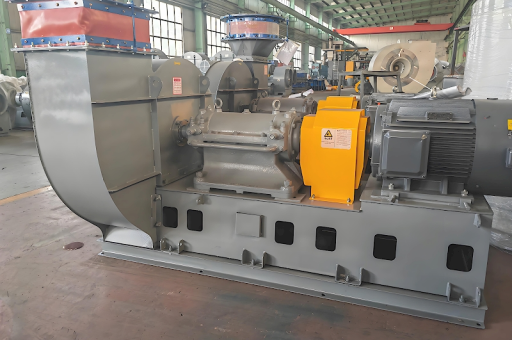
- Table of Contents
- Introduction: The Role of High-Quality Materials in Industrial Fan Manufacturing
- Why Q345 High Quality Carbon Steel? Material Properties and Industrial Advantages
- The Design Principles Behind High Efficiency Industrial Centrifugal Fans
- Manufacturing Excellence: Precision, Welding, and Balancing
- Applications Across Industries: Where These Fans Deliver Maximum ROI
- Frequently Asked Questions (FAQ)
- Conclusion: Choosing the Right Manufacturer for Long-Term Reliability
Q345 High Quality Carbon Steel High Efficiency Industrial Centrifugal Fan Manufacturer: Engineering Durability and Performance**
Table of Contents
- Introduction: The Role of High-Quality Materials in Industrial Fan Manufacturing
- Why Q345 High Quality Carbon Steel? Material Properties and Industrial Advantages
- The Design Principles Behind High Efficiency Industrial Centrifugal Fans
- Manufacturing Excellence: Precision, Welding, and Balancing
- Applications Across Industries: Where These Fans Deliver Maximum ROI
- Frequently Asked Questions (FAQ)
- Conclusion: Choosing the Right Manufacturer for Long-Term Reliability
Introduction: The Role of High-Quality Materials in Industrial Fan Manufacturing
In heavy industries such as power generation, cement production, chemical processing, and mining, industrial centrifugal fans are the backbone of ventilation, dust extraction, and air movement systems. However, not all fans are built to withstand the harsh conditions of continuous operation. A key differentiator between average and exceptional fan performance lies in the choice of material.
This article focuses on the Q345 high quality carbon steel high efficiency industrial centrifugal fan manufacturer, examining how material selection directly impacts energy efficiency, structural integrity, and long-term operating costs. By analyzing the metallurgical properties of Q345 steel and the engineering approaches used by leading manufacturers, we aim to provide procurement engineers and plant managers with actionable insights.
Why Q345 High Quality Carbon Steel? Material Properties and Industrial Advantages
Q345 is a low-alloy high-strength structural steel widely used in China and recognized globally. Unlike standard Q235 carbon steel, Q345 offers superior mechanical properties:
- Yield Strength: ≥345 MPa (compared to 235 MPa for Q235)
- Tensile Strength: 470–630 MPa
- Good Weldability and Impact Toughness
- Excellent Low-Temperature Performance (down to -40°C)
For a high efficiency industrial centrifugal fan manufacturer, using Q345 carbon steel means the fan housing, impeller, and inlet cone can withstand higher static pressures, thermal stress, and abrasive particle impact without deformation. This translates directly into longer service life and reduced maintenance frequency.
Practical example:
A Q345 fan casing used in a wind turbine cooling system must resist both corrosive coastal air and vibrational fatigue. The higher strength-to-weight ratio of Q345 allows manufacturers to reduce material thickness while maintaining stiffness, resulting in a lighter fan that is easier to install and requires less structural support.
The Design Principles Behind High Efficiency Industrial Centrifugal Fans
Efficiency in a centrifugal fan is not just a number on a datasheet—it is the result of careful aerodynamic and mechanical optimization. A reputable Q345 high quality carbon steel high efficiency industrial centrifugal fan manufacturer follows these design principles:
- Backward-Curved Impeller Blades: These blades reduce turbulence and allow higher static pressure recovery, achieving up to 85% aerodynamic efficiency.
- Optimized Inlet Cone and Volute Geometry: Computational Fluid Dynamics (CFD) simulations are used to minimize recirculation and vortex losses.
- Finite Element Analysis (FEA) for Stress Distribution: The high strength of Q345 enables thinner yet stiffer blade profiles, reducing rotational inertia and starting torque.
- Dynamic Balancing: Each impeller undergoes ISO 1940 G2.5 balancing to minimize vibration and extend bearing life.
Example:
For a 75 kW centrifugal fan used in a cement plant's baghouse filter, a manufacturer using Q345 steel can achieve a 12% reduction in energy consumption compared to a Q235 fan of the same duty point, simply because the impeller can maintain its shape under load more consistently, preserving blade clearance and aerodynamic stability.
Manufacturing Excellence: Precision, Welding, and Balancing
When evaluating a high efficiency industrial centrifugal fan manufacturer, the factory floor processes matter as much as material selection. For Q345 steel fans, the manufacturing steps are:
- Plasma or Laser Cutting: With tolerance ≤ ±0.5 mm for impeller blades and inlet cone.
- Precision Forming: Hydraulic press bending of volute casing without micro-cracking.
- Welding Protocol: Preheating and low-hydrogen electrodes (like E5015) to avoid brittle weld zones in Q345.
- Post-Weld Stress Relief: Vibration stress relief or furnace stress relief for large casings.
- Dynamic Balancing: On-site balancing at operating speed (up to 3000 RPM).
- Non-Destructive Testing (NDT): Ultrasonic inspection of weld seams and impeller hub.
A certified manufacturer will also provide performance test reports (ISO 5801 or AMCA 210) and material certificates for Q345 steel, ensuring traceability from mill to installation.
Applications Across Industries: Where These Fans Deliver Maximum ROI
wind turbine (Cooling Systems)
Radial fans made from Q345 carbon steel cool generators, gearboxes, and converters. The steel’s corrosion resistance (when coated) and high fatigue strength reduce unscheduled downtime.
Cement & Mineral Processing
High-temperature fans (up to 350°C) for raw mill exhaust and clinker cooling benefit from Q345’s low creep deformation.
Steel Mills
Blast furnace gas fans require high-pressure, high-volume performance. Q345 impellers retain integrity under high thermal gradients.
Wastewater Treatment
Aeration blowers in outdoor environments exposed to hydrogen sulfide benefit from Q345’s better impact resistance and weldability for repair.
Power Plants (Thermal & Biomass)
Induced draft fans handling flue gas with fly ash require wear-resistant materials; Q345 combined with hard-facing coatings extends service life by 30–50%.
Frequently Asked Questions (FAQ)
Q1: Is Q345 carbon steel suitable for high-temperature applications?
Yes, up to 400°C continuously. Beyond that, creep resistance decreases, so for extremely high temperatures (e.g., 600°C), consider stainless steel or heat-resistant alloys.
Q2: How does a Q345 fan compare to a stainless steel fan in corrosive environments?
Q345 is more cost-effective and higher strength, but for strong acids or chlorides, stainless steel (e.g., 304L or 316L) is recommended. A Q345 fan can be epoxy-coated for moderate corrosion resistance.
Q3: What certification should a reliable manufacturer provide for Q345 steel?
A material test certificate (MTC) per EN 10204 3.1 or GB/T 1591, showing chemical composition and mechanical properties. Additionally, an AMCA or ISO 5801 performance curve.
Q4: Can Q345 fans be repaired in the field?
Yes. Its good weldability allows field repairs with preheating (100–150°C) and post-weld stress relief. Many manufacturers offer on-site reconditioning for balancing and coating.
Q5: What is the typical lead time for a custom Q345 centrifugal fan?
From 6 to 12 weeks, depending on complexity. Standard models may be available in 3–4 weeks.
Q6: How do I select the right manufacturer for high efficiency?
Request CFD-based performance curves, check for ISO 9001 and ISO 14001 certifications, ask for dynamic balancing records, and verify NDT reports on the impeller welds.
Conclusion: Choosing the Right Manufacturer for Long-Term Reliability
The phrase Q345 high quality carbon steel high efficiency industrial centrifugal fan manufacturer is not merely a product descriptor—it represents a commitment to material science, aerodynamic precision, and operational reliability.
When you select a manufacturer that combines Q345 steel with modern CFD design, strict welding protocols, and ISO-compliant testing, you are investing in:
- Lower energy bills (up to 15–20% reduction)
- Fewer emergency shutdowns
- Extended equipment lifespan (often 10–15 years or more)
- Simplified maintenance via field-weldability
For industries such as wind turbine, cement, steel, and power generation, the choice is clear: prioritize material integrity and manufacturing transparency. Always request third-party performance validation and material certificates. A high-quality fan built from Q345 steel will not only move air—it will move your business toward greater efficiency and lower total cost of ownership.





